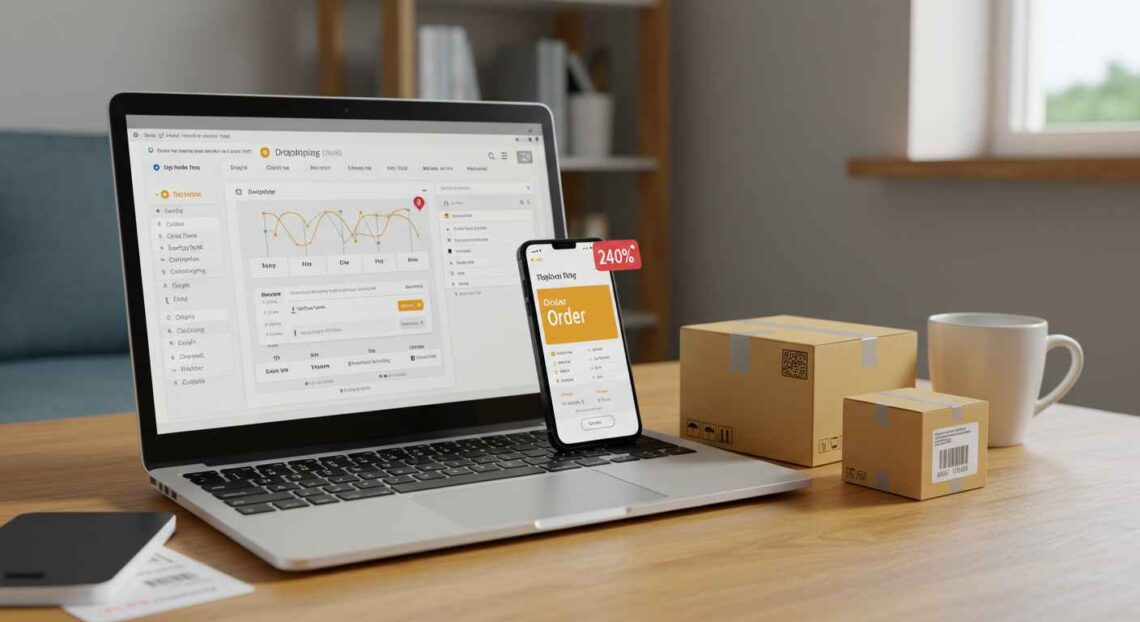
Dropshipping is one of the easiest ways to start an online store without buying or holding inventory. In dropshipping, you sell products on your website or online store, and your supplier ships the products directly to your customer. You act as the seller and marketer. This guide will explain dropshipping step by step in simple English so you can start with low risk and test ideas fast.
What is dropshipping? (Short and clear)
Dropshipping is a retail method where you list products for sale, take orders, and forward those orders to a supplier or manufacturer. The supplier prepares and ships the product. You never touch the product. You keep the difference between the selling price and the supplier price as profit.
Why people like dropshipping
- Low startup cost. You do not buy stock in advance.
- Low risk. If a product does not sell, you are not stuck with it.
- Easy to test ideas. You can try many products and find what sells.
- Work from anywhere. All you need is a laptop and internet.
But dropshipping is not magic — it needs work, marketing, and good customer service.
Step 1 — Choose a niche (very important)
Pick one area to focus on instead of selling everything. A niche helps you target customers and reduce competition.
Good niche ideas:
- Fitness accessories (resistance bands, water bottles)
- Phone & tech accessories
- Home organization tools
- Pet supplies (toys, grooming tools)
- Eco-friendly products (reusable bags, straws)
How to choose:
- Pick something you understand or like.
- Check demand: look at social media, marketplaces, or search trends.
- Avoid ultra-competitive categories (big brands dominate).
- Aim for items with reasonable price and shipping (light and small is easier).
Step 2 — Find reliable suppliers
Suppliers are the heart of dropshipping. You need suppliers who ship fast, have good product quality, and provide tracking.
Where to find suppliers:
- Marketplaces like AliExpress, Alibaba (use dropshipping-friendly sellers).
- Local suppliers/wholesalers (faster shipping inside your country).
- Dedicated dropshipping platforms (Spocket, CJdropshipping, SaleHoo).
What to check:
- Product quality: Order samples before selling.
- Shipping time: Faster shipping improves customer satisfaction.
- Return policy: Know how returns and refunds work.
- Communication: Supplier should respond quickly.
- Product photos and descriptions: Good quality assets help your store.
Step 3 — Pick a selling platform
You can sell on marketplaces or build your own store.
Options:
- Own store (Shopify, WooCommerce): More control and brand building.
- Marketplaces (eBay, Etsy): Faster setup, built-in traffic but fees and rules.
- Social selling (Facebook, Instagram Shops): Good for direct marketing.
For beginners, Shopify or WooCommerce is common:
- Shopify: fast setup, built-in tools, monthly fee.
- WooCommerce: works with WordPress, more control, lower cost if you host it.
Step 4 — Create product listings that convert
Your product page must answer questions and build trust.
Essentials for a good listing:
- Clear, simple product title.
- Short benefits and a longer description with features.
- Good photos (use supplier photos but add your own if possible).
- Price that covers costs, platform fees, ads, and profit.
- Shipping time and return policy clearly stated.
- Customer reviews or testimonials (start by asking friends to test).
Pricing tip:
- Calculate all costs: supplier price + shipping + platform fees + ads + taxes.
- Typical starting markup is 20%–50%, but test different prices.
Step 5 — Set up payment, shipping & policies
Make buying easy and safe.
Payment:
- Use trusted payment gateways (PayPal, Stripe, local gateways).
- Ensure the currency is clear to the customer.
Shipping:
- Offer clear shipping options (standard, express).
- Show estimated delivery times (be honest — do not promise 3 days if supplier needs 20 days).
Policies:
- Create simple Refund/Return, Privacy, and Terms pages.
- Explain what customers should do if a product is damaged or missing.
Step 6 — Start marketing (traffic & sales)
A store without traffic gets no sales. Focus on one marketing channel first.
Effective channels:
- Facebook & Instagram ads: Good for visual products and quick tests.
- Content marketing / Blog: Long-term, builds trust, helps SEO.
- Influencer marketing: Send product to small influencers in exchange for review.
- Search ads (Google): Works if product solves a clear search intent.
- Organic social: Post reels, photos, and short videos related to your niche.
Start small:
- Run low-budget ads to test product interest.
- Track metrics: cost per click (CPC), conversion rate, cost per acquisition (CPA).
- Scale what works and stop what does not.
Step 7 — Manage orders and customer service
Process orders quickly and give good support.
Order flow:
- Customer orders on your store.
- You forward order to supplier and pay supplier price.
- Supplier ships to customer.
- Provide tracking to the customer.
Customer service tips:
- Respond fast and politely.
- Be honest about shipping times.
- Offer refunds or replacements when faults happen. This builds trust.
Step 8 — Monitor, test, and improve
Dropshipping needs constant testing.
What to measure:
- Sales per product
- Conversion rate (visitors -> buyers)
- Return rate and complaints
- Average order value (AOV)
- Profit per sale after all costs
What to test:
- Product images and titles
- Prices and discounts
- Ad creatives and audiences
- Shipping options and descriptions
Use small tests and change one thing at a time. Keep the winning changes.
Common problems & how to handle them
- Slow shipping — Use local suppliers or offer faster paid shipping.
- Bad product quality — Stop supplier, test samples first next time.
- High returns — Improve product descriptions and add clear photos.
- Low conversions — Improve page copy, photos, and simplify checkout.
- Ad costs too high — Find cheaper audiences, use organic posts, try influencers.
Legal & tax basics (short)
- Register your business if required in your country.
- Collect and pay taxes according to local laws.
- Be careful with brand names and trademarked products — do not sell illegal or counterfeit goods.
Speed tips for beginners
- Start with 1–3 products only.
- Use platforms that simplify order forwarding to suppliers.
- Learn basic ad setup and analytics.
- Keep shipping promises realistic.
- Collect customer emails to offer repeat sales.
Is dropshipping right for you?
Dropshipping fits people who want low startup cost and flexibility. It is good for testing product ideas. But expect learning, marketing work, and customer service. If you want full control over product quality and faster shipping, other models (stock inventory) may be better later.
Quick checklist before launch
- Niche chosen and one product selected.
- Supplier tested with sample order.
- Store built and payment methods set.
- Product pages optimized.
- Shipping and return policies written.
- Marketing plan ready (ads or organic).
- Customer support plan available.
Final advice
Start small, learn fast, and treat customers well. Most successful stores began with a few test products and grew after tuning ads and product selection. Dropshipping is about good suppliers, clear marketing, and excellent service. Keep improving and you can build a steady business from home.